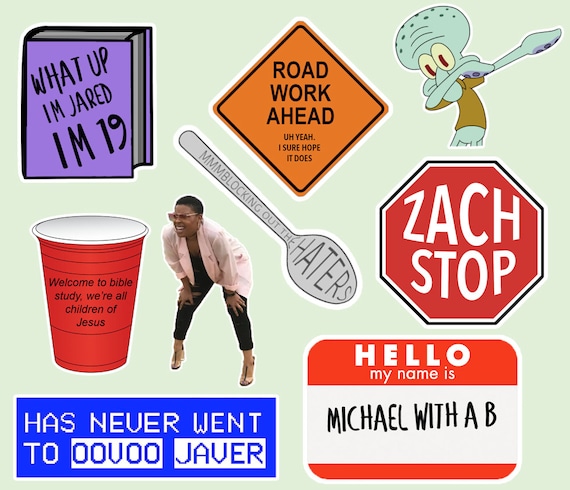
One of the most interesting things about the fall of Vine is that it was unable to keep up with the monetization demands created by other social media platforms. Advertisements have been seeping into every aspect of media possible since their creation. This really set in the true reason why Vine failed, and I remember when it was happening in real time. My friends were concluding that Vine sold out to a larger company, and the creator just wanted the money, but it’s definitely appearing to be more complex than that.
Our podcast research shows that the popular content creators rejected the proposed changes to Vine in a meeting with the executives to discuss the future of the app, causing the monetization of Vine to fail. There were other platforms at the time like YouTube that could house longer videos than the typical 6-second standard for Vine, so the need didn’t fit the wants of the creators. They wanted to keep using Vine for what everyone loved it for, and I wish this could be how “influencers” handled things today. They often utilized social media in ways that the audience loved instead of using it as income (though we all know of some Vine creators who moved on to YouTube, Twitter, and TikTok). And back then, 6 seconds was just enough time to be comical, and quotes from Vines are still used today.
Another thing I’ve been discovering while researching is how much influence Vines continue to have. People will comment on TikTok videos with the phrase “vine energy” and somehow, some way, we as the audience just get it. It makes total sense no matter the genre of video, too. And speaking of Vine in recent events, the hot goss’ in October last year featured Elon Musk proposing the return of the app after he bought Twitter. Of course, like he sorta always does, he talks a lot of talk about it then lets it die out. Does he do this for attention and buzz? Yeah, probably. Its potential revival is definitely something I didn’t know about Vine and learned in my research, so stay tuned for more details in Go Off I Guess: The Rise and Fall of Vine.
Go Off I Guess: The Rise and Fall of Vine! It’s time to nail down a podcast topic, and man, I’m excited. Alexia and I will be tackling this topic together, so I hope you’re ready to feel like a fly on the wall because we’re passionate about this. We’re looking to connect the monetization of TikTok and YouTube that exists today as a result of Vine. The driving question: Why did Vine shut down? The closed question: Why was Vine so popular? The open question: What events could have led to Vine’s closure? This will intentionally be only about Vine and will not pertain to its creation or other popular social media during its time. There are a lot of resources on the internet about this topic, and we’ll be using YouTube, articles, and podcasts for the most part. We want to remain neutral with our observations, so we want to take a look at some of the creators and their successes/failures since Vine.
As for engaging the audience, I mean, it’s Alexia and I. I feel like our energy is electric, and we can share our excitement in a way that the audience wants to learn more about our topic. I know she mentioned using Vines as sound bites for transitions, and I’m all for it. They’re used in conversations like transitions anyway, so we may as well stay on par for the assignment. I’m not picky about this part to be honest. I’m hoping that the audience can remember that we share small bits of universal experiences more often than we think. Vine was a resource that showed us change can be both good and bad, too.
I’ve outlined a different podcast episode below as an exercise for this week, and I feel like this is something that made it really easy for me to quickly think of ideas for my own podcast. On the podcast episode “Sad Ass Songs” from Dolly Parton’s America, our hosts explore the work of Dolly Parton and the way she unifies her fans. Here’s my outline:
Introduce Dolly Parton with praise and a personal connection to her from Jad who grew up in Tennessee.
Mention the election in 2016 and Dolly’s presence on Twitter during that time. Jad also provides a personal story of meeting people of all kinds who adore Dolly and saw her on tour. They are even polite regardless of their differences.
Jad notes that Dolly is a unifier with support. He tells a story of meeting Dolly (she’s friends with his dad) and asking her what she thought about the way she brings people together.
Jad talks about having Dolly in the studio in 2017. There are some audio snippets from that included discussion of her musical talents, her early music, and how she used to write “sad ass songs.”
Jad interrupts the archived clip to discuss why he made that choice.
Plays a clip from Dolly on Letterman being able to one up with her own statements.
Another clip from Helen Morales discussing Dolly the sheep’s name choice. Jad asks her about these instances.
Jad mentions the way that Dolly was seen as a joke maker.
Dolly talks about the story behind “Daddy Come and Get me”
Dolly talks about “The Bridge”
Dolly opens up about her hardships in the 80’s and relationship with God/suicide
Dolly talks about women losing children. Audio clip from “Down from Dover” and the archived interview plays.
Audio clip from Jad calling a journalist named Paul Slade about the Knoxville girl who was killed and thrown in the Knoxville River.
Discussion of Dolly’s ability to speak about experiences she has never had between Jad and Robert Orman.
Dolly’s first interview in 1967 briefly plays. Helen Morales is brought back in to discuss Dolly.
Advertisement.
Jad and Shima briefly do a re-introduction.
Shima provides context for Sarah Smarsh’s idea that Dolly is the OG 3rd-wave feminist.
A clip plays of Jad talking to Dolly about this. Shima and Jad discuss further.
Audio clip of a conversation with Sarah’s grandma, Betty, who was born in 1945.
“A Coat of Many Colors” plays
Jad reflects on more of the interview with Shima then moves on to the next time he saw Dolly, clip plays from that time
Credits and Final Wrap Up
The outline of podcasts seem to vary, and I think that’s why they’re such a popular outlet. There’s always an introduction and a conclusion that summarize the topic. I found it interesting that this podcast included a lot of audio clips, and that was a bit jarring but I think they did their transitions well-enough. I enjoyed the way they reflected their topics in the audio. If they’re going to include so many archived clips, they’d absolutely have to be relevant for listeners to keep on. The songs were a nice touch, too. I also felt like there was a good balance of summary, quoting, and discussion of the topic. Overall, I really liked listening to it and I can truly say I learned something about Dolly Parton that I didn’t know before.